Tuesday, 13 August 2013

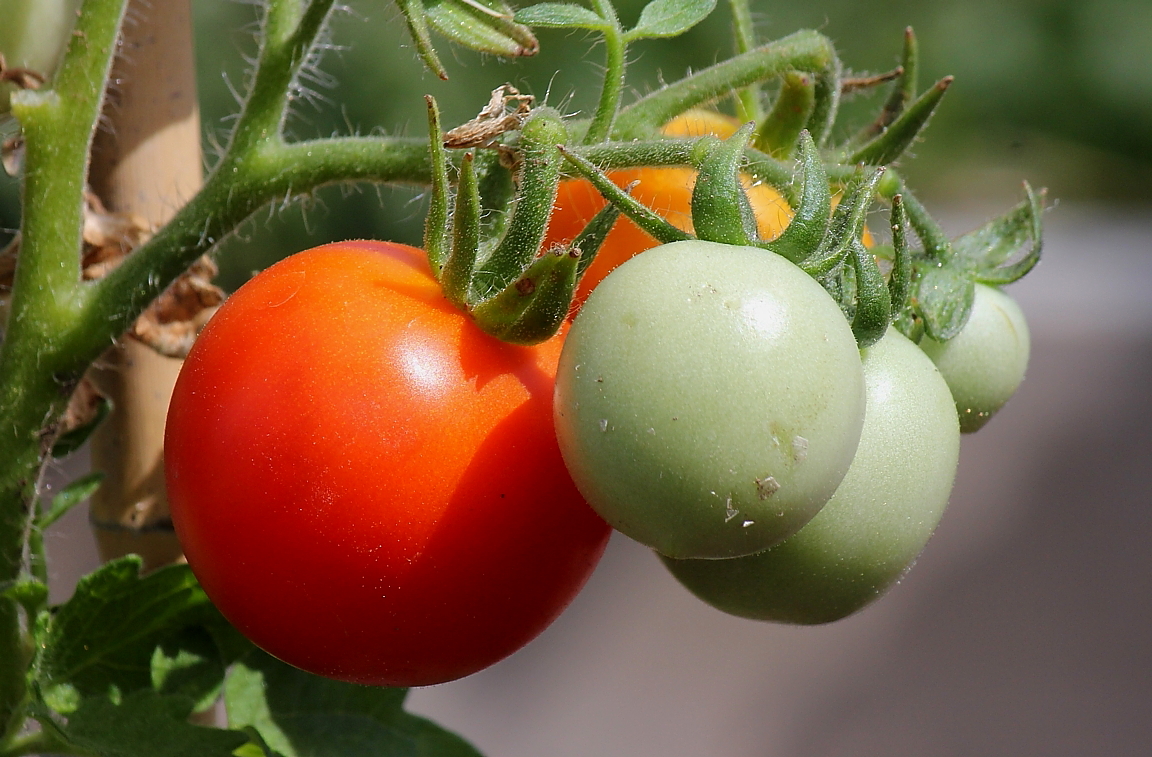
Nearly ready for the salad bowl


Walney Family Fun Run - Sunday 1st September


A nice article in theNW Evening Mail about our recent training workshops


Growing your own in autumn

You can continue to sow fast maturing autumn crops such as spring cabbage, spinach, turnips, and oriental vegetables.

Garlic - can be planted in October or early November. It can also be planted in early spring, but will give much better yields if it goes through a cold period over winter.

Rocket - generally known as a summer salad can be grown in September, will last well into the autumn and can sometimes survive the winter in mild conditions and/or with some protection.

Onion sets - can be planted up until November.

Winter purslane - is a very hardy winter salad, good at self-seeding and can be sown direct until the end of September.  It produces small, mild tasting, succulent leaves.

New potatoes for Christmas?

If you have tubers left from a crop of early potatoes, put them in a light, frost-free place. When shoot appear, plant 3 into a 15 litre tub with drainage holes. Place tubers onto a 15cm (6in) layer of multipurpose or potting compost, cover with 7.5cm (3in) of compost. As the shoots grow, fill the container with compost, always leaving the top of the shoots in the light. Water regularly, support the foliage with canes and protect from frost. Empty the container on Christmas morning (no peeping before!) and harvest the new tubers.

RHS Grow Your Own veg planner

You can also download a copy of the veg planner direct from the RHS website here


Saturday, 10 August 2013

Cumbria Wildlife Trusts moth trapping event at Green Heart Den

Cumbria Wildlife Trusts Moth trapping event at Green Heart Den. During the event Cumbria Wildlife Trust officer Sue Thurley set up two moth traps up to find out what moths were present in the area and explained how to identify the different moth species.


Thursday, 8 August 2013

A burst of colour from our nasturtiums


A busy little bumblebee enjoying some of our common toadflax


Todays FREE gardening workshop - Propagating and taking cuttings

The aim of this workshop was to learn simple ways to propagate/produce more plants by taking cuttings. The session included:

i) Discussing the biology of plant propagation.
ii) Practising taking cuttings of a number of different kinds of plants.
iii) Propagating plants in the poly tunnel for people to take home or donate to the Green Heart Den garden.


The FREE session was facilitated by Jennifer Lauruol of Carpe Diem Garden Design Lancaster.

Funding to enable the training workshops has been provided from a grant we were awarded by People’s Health Trust using money raised by Healthable Community Interest Company through The Health Lottery.

FREE digital photography workshop at CADAS


Monday, 5 August 2013

Planting bulbs for early pollinators

Not sure what to do in the garden at the moment - Why not plant some spring-flowering bulbs that will help pollinators by providing them with an early food source next year. 


Autumn is the ideal time to plant bulbs such as crocus, aconite, snowdrops and grape hyacinth. These will also grow well in pots and containers if you only have a small space or balcony.

Sowing and planting vegetables in August

There are a large variety of vegetables that you can continue to sow and plant in August.


Plants such as:
  • Chinese cabbage - Until end of August
  • Spring cabbage - Sow in seedbed to transplant in Sept/Oct
  • Chicory - Until end of August    
  • Land cress or American cress -Makes an excellent substitute for watercress and is very hardy, usually surviving even the toughest winter.
  • Winter Lettuce - Sow winter varieties for harvesting in November and December.
  • Autumn sown (Japanese) onions - Sow seed in August. Sets can be planted in September.
  • Salad onions - Winter varieties from August onwards
  • Oriental greens - A whole range of these useful crops can be sown now.
  • Pak choi - Until end of August. China Choi has thick white stems and contrasting dark green leaves.
  • Peas - Last chance for autumn harvest. Sow a quick, 'early' variety such as Douce Provence or Meteor
  • Radish, mooli - Until end of August
  • Radish, winter - Until end August. Sow winter varieties such as China Rose and Black Spanish Round
  • Rocket - An August sowing of rocket will last well into the autumn and sometimes survive the winter in mild conditions or with some protection.
  • Spinach, perpetual - Until mid August, or end of August under cover.
  • Chard - Until mid August, or end of August undercover. 
  • Turnip - Early varieties till end August; main crop varieties till August. One of the easiest vegetables to grow. 

FREE and fun growing, crafts and cooking workshops during August

FREE, and fun gardening, growing, crafts and cooking workshops at the Green Heart Den during August include ...

• Thursday 8 August, 10-12noon - FREE Propagating /taking cuttings - using the poly tunnel
• Thursday 8 August, 1-3pm - FREE Propagating /taking cuttings - using the poly tunnel
• Thursday 22 August, 10-12noon - FREE Art in the garden - drawing/painting flowers etc 
• Thursday 22 August, 1-3pm - FREE Art in the garden - drawing/painting flowers etc.
• Thursday 29 August, 10-12noon - FREE Cook and eat on the site (using rocket stove/Kelly kettle)
• Thursday 29 August, 1-3pm - FREE Cook and eat on the site (using rocket stove/Kelly kettle

Please don’t book a session unless you intend to attend.

You can book for a session by ringing 01229 876546 or by email to neighbourhoodmgt@barrowbc.gov.uk


Sunday, 4 August 2013

Gardening for wildlife

Everyone can be a wildlife gardener. Whether you are an expert gardener or simply enjoy growing plants on a patio, in a few tubs or on an allotment, there is lots you can do to encourage wildlife to visit. Natural England has produced several informative booklets on wildlife gardening which can be downloaded on their website at: http://www.naturalengland.org.uk/advice/wildlifegardening/booklets.aspx


Planting with pollinators in mind.....

The Royal Horticultural Society (RHS) has compiled two downloadable plant lists to help gardeners identify plants that will provide nectar and pollen for bees and many other types of pollinating insects: http://www.rhs.org.uk/Gardening/Sustainable-gardening/Plants-for-pollinators


Thursday, 25 July 2013

Common blue butterfly


National Citizens Service visit

Young people who are taking part in the National Citizens Service visiting the Green Heart Den as a planning exercise and to learn more about our community project as a whole. The activity had been arranged by Inspira (formerly Connexions Cumbria) who are working with communities in Cumbria and across the UK, delivering careers guidance to individuals, schools and colleges and support for at-risk young people.


Wildlife identification workshop session

Wildlife identification workshop, as facilitated by Cumbria Wildlife Trust. Wildflowers, butterflies, bees and more - a workshop looking at the abundant wildlife at Green Heart Den. During the session attendees we taught how to identify a variety of species and the role they play in our urban environment.


Funding to enable the training workshops has been provided from a grant we were awarded by People’s Health Trust using money raised by Healthable Community Interest Company through The Health Lottery.

Tuesday, 23 July 2013

Quote for the week......

"If we are not happy, if we are not peaceful, we cannot share peace and happiness with others, even those we love, those who live under the same roof. If we are peaceful, if we are happy, we can smile and blossom like a flower, and everyone in our family, our entire society, will benefit from our peace." - Thich Nhat Hanh